As the first semester progresses, the University looks ahead to several significant events that enrich not only academic life but also the intellectual, spiritual, and communal character of the University.
Empedocle’s circle of love and strife depicted in woman as the animating power of the Universe
A REFLECTION BASED ON STUART MILL’S SOCIAL
UTILITARIANISM.
A reflection based on Stuart Mill’s Social Utilitarianism
St. Bonaventure University Opens the 2026 -2027 Academic Year
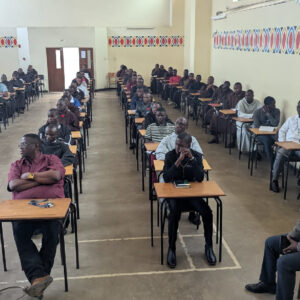
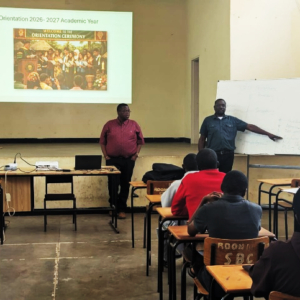
This years’ academic year on August 10th, 2026 with a five-day orientation programme for the newly admitted First Year students, which ran from 10th – 15th August. The orientation introduced the new students to the academic, spiritual, and communal life of the University and prepared them for the intellectual demands of university formation.
Running concurrently with the orientation was a seminar on pastoral work for the Second-Year brothers, providing them with an opportunity to deepen their understanding of pastoral ministry and its relationship with academic and human formation.
All students officially commenced lectures on August 17th 2026, marking the beginning of the University’s formal academic programme. Lecture halls and other spaces of learning once again became places of questioning, dialogue, critical reflection, and the pursuit of truth – central elements of philosophical education.
A significant moment in the opening of the academic year came on September 11th 2026 with the celebration of the Official Opening Mass. The Eucharistic celebration brought the University community together in thanksgiving and prayer and formally inaugurated the new academic year.
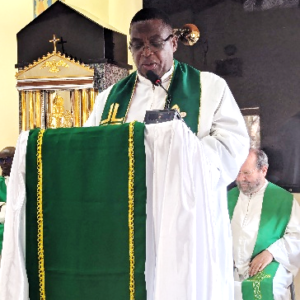 During the celebration, the Rector, Fr. Alfigio Tunha O.F.M., officially inaugurated the academic year and warmly welcomed the new First-Year students into the University community. In a special way, he also recognised the four sisters who have, for the first time, joined St. Bonaventure University to pursue intellectual formation. Their presence marks a noteworthy development in the University’s academic community, further enriching its life through diversity of vocation, experience, and perspective.
The Rector’s welcome emphasised that entering the University is not simply a transition into higher education but an invitation to participate in a community committed to the search for truth, wisdom, and human flourishing. For an institution devoted particularly to philosophy, academic formation calls students to move beyond the mere accumulation of knowledge and to engage critically with fundamental questions concerning reality, humanity, morality, and existence.
The opening of the academic year therefore represents more than the resumption of lectures. It renews the University’s commitment to forming persons who can think critically, engage ideas responsibly, and place knowledge at the service of truth and society.
As the 2026 – 2027 Academic Year unfolds, our University looks forward to a year of rigorous study, philosophical dialogue, fraternity, pastoral engagement, and intellectual discovery. For the new students, it is the beginning of a new journey of transition from the veil of ignorance to knowledge and truth as symbolised through Plato’s allegory of the curve; for the continuing students, an opportunity to deepen their intellectual horizons; and for the entire University community, a renewed invitation to seek wisdom and allow learning to become a form of transformation.
Philosophy & Academic Integrity
Author: Alfigio Tunha, OFM
Guest of Honor: Honorable Douglas Syakalima, represented by Madam Gladys Ntele, Members of the SBU Executive Board, Superiors of the Franciscan Families, Major Superiors and delegates of various religious Orders, and all our distinguished guests, Members of the Diplomatic Corps of the 13 African countries represented here, and Members of different ministries of Zambian governments, Priests, Religious, Teaching Staff, Administration staff, Ancillary Staff, our collaborators, friends and relatives, our graduands, and all the students at large—ladies and gentlemen—all protocol observed.
The Current Degradation of Sexual Morality
Author Friar ODONGO Nicholas Weke, OFM Conventual.
Human Being! Who is this unbridled creature? Who is this untamed creature? Who is this impossible possibility?
Man as Rational and Divinely Created
Author: Lawrence Mondoka, OFMConv
Human beings are created in the image and likeness of God (Gen 1:26); they are to enjoy communion and exercise stewardship in a physical universe. The activities entailed by interpersonal communion and responsible stewardship engage the intellectual and affective capacities of human persons. They consist of “rational” and “divinely” attributes because they are created in the image of God. This means that every human person has a special place in the hierarchy of creation and participates in divine life.